






Ninja Grandmaster Robert Law
Information
Grandmaster
Daily Training & Academies
Annual Training Camps
Books for Sale
Location
Pics & Clips
FAQ
Testimonials
Contact Us
Site Map
Home
Geijin Ryu International Ninja Training Camps & Academies


Training
Offering Elite Self Defense Training to Men, Women and Children

Annual Training Camps Daily Training & Academies

“There are no doubt people who think that even to be practicing material arts will not prove useful when a real need arises. As far as that is concerned; the true way of Martial Arts is to practice in such a way that they will be useful at any time, and to teach them in such a way that they will be useful in all things.”

-Grandmaster Robert Law

--------------------------

Upcoming Training Camps:

Winter 2009

Feb 14-16 -09

&

Summer 2009

July 31 to August 3 2009

------------------------------

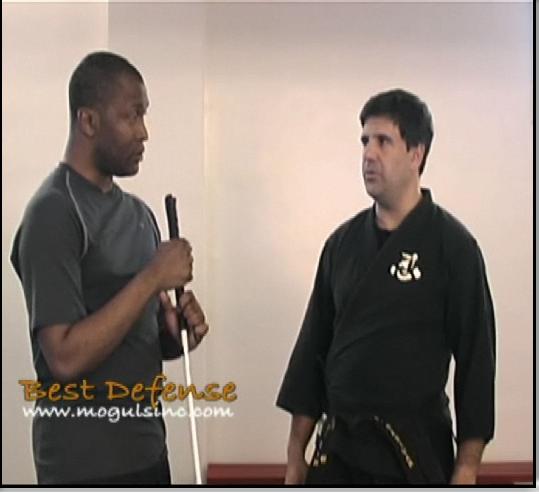
Click here to watch a 10 minute documentary with Master Farivar demonstrating various techniques on Vision Network Channel 6's "Best Defence"

------------------------


Thank you for all the 2008 camp participants!

Pictures and clips coming soon!


--------------------------------------

New

Virginia USA training location!

contact Nathan:

1-703-966-7737

--------------------------------------

Do YOU know what a good Ninjutsu School is ??

Read our new article here and find out!

Includes...

-Comparing Ninjutsu and other arts

-Ninja and Samurai arts - NOT THE SAME!

-Ninja History and the lineage issue

...And much more!

-------------------------------------


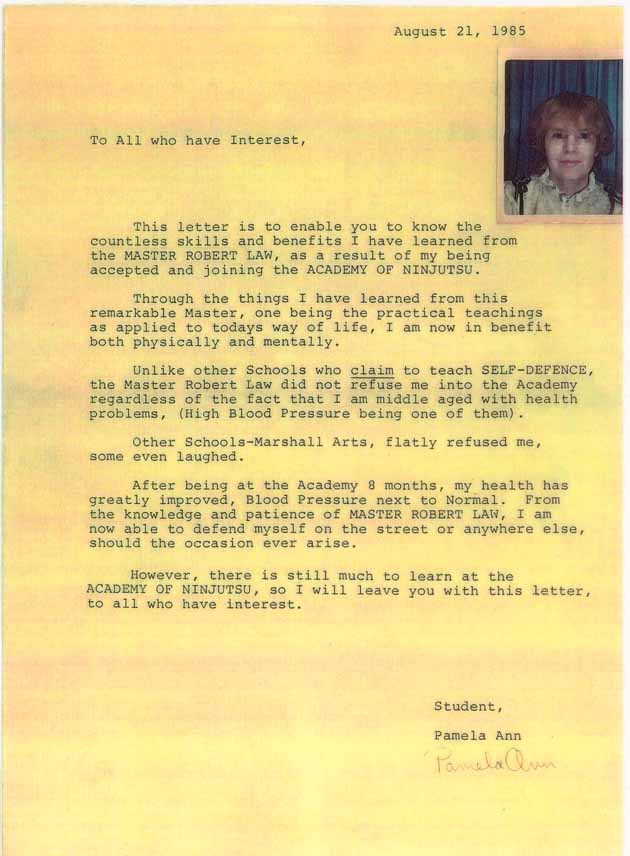
NEW MEDICAL TESTIMONIALS/LETTERS

SECTION

CLICK HERE


------------------


See our newly updated Philosophy Page here


-------------------

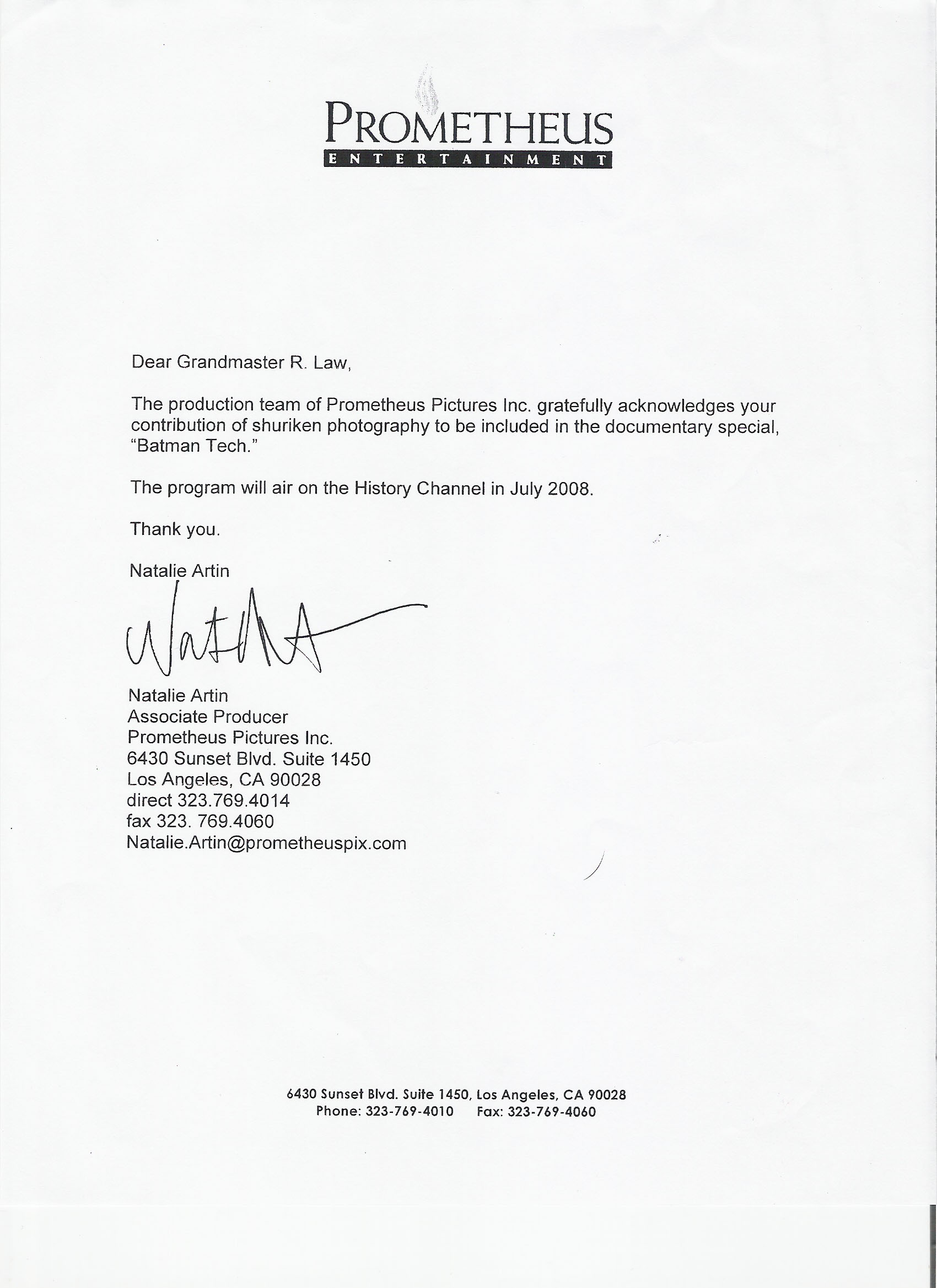
Geijin Ryu were selected as consultants on a Discovery Channel special show on weapons

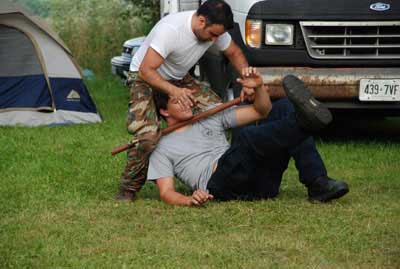
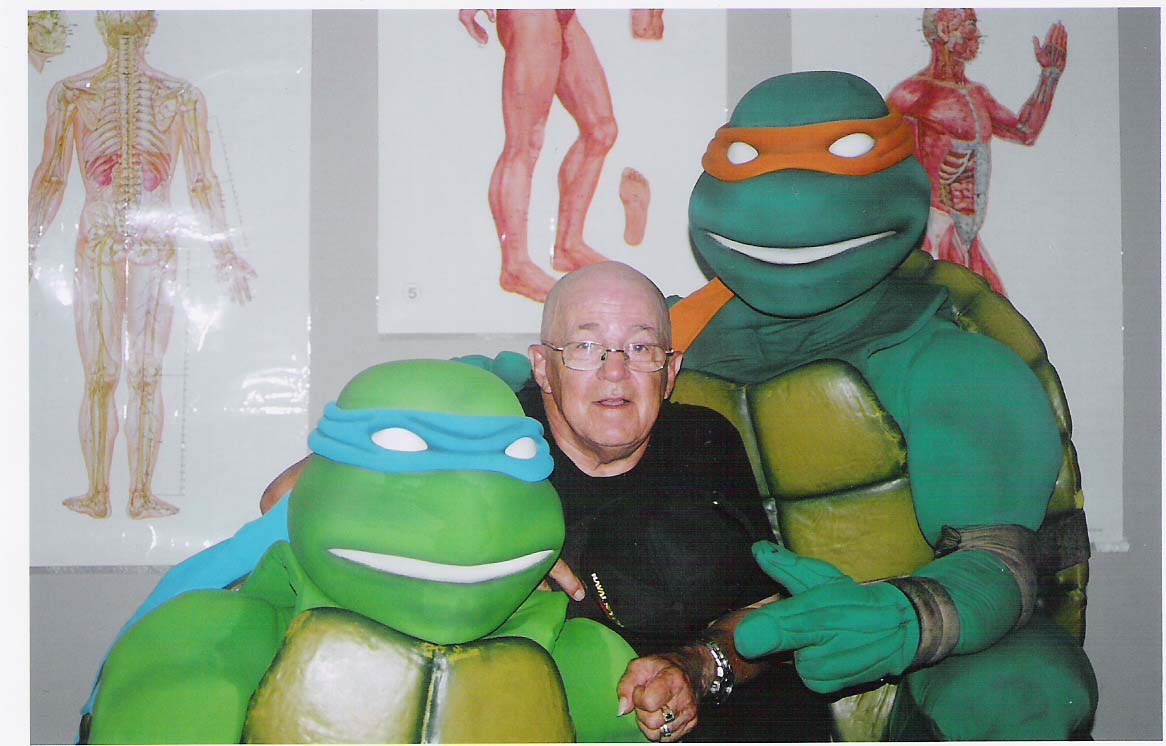
Geijin Ryu Ninja Academies were selected by Warner Brothers Entertainment to train some of the Turtles/actors for a Promotional TV spot for Release of the Teenage Mutant Ninja Turtles DVD release.

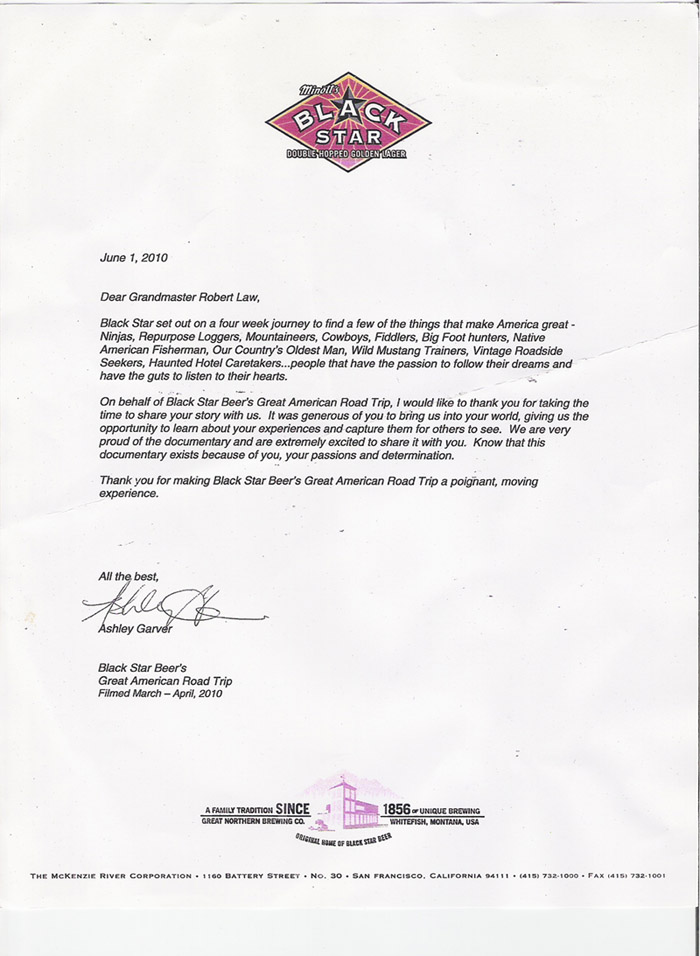
below are pictures, and clips and thank you letter from Warner Bros.

click letter for larger picture


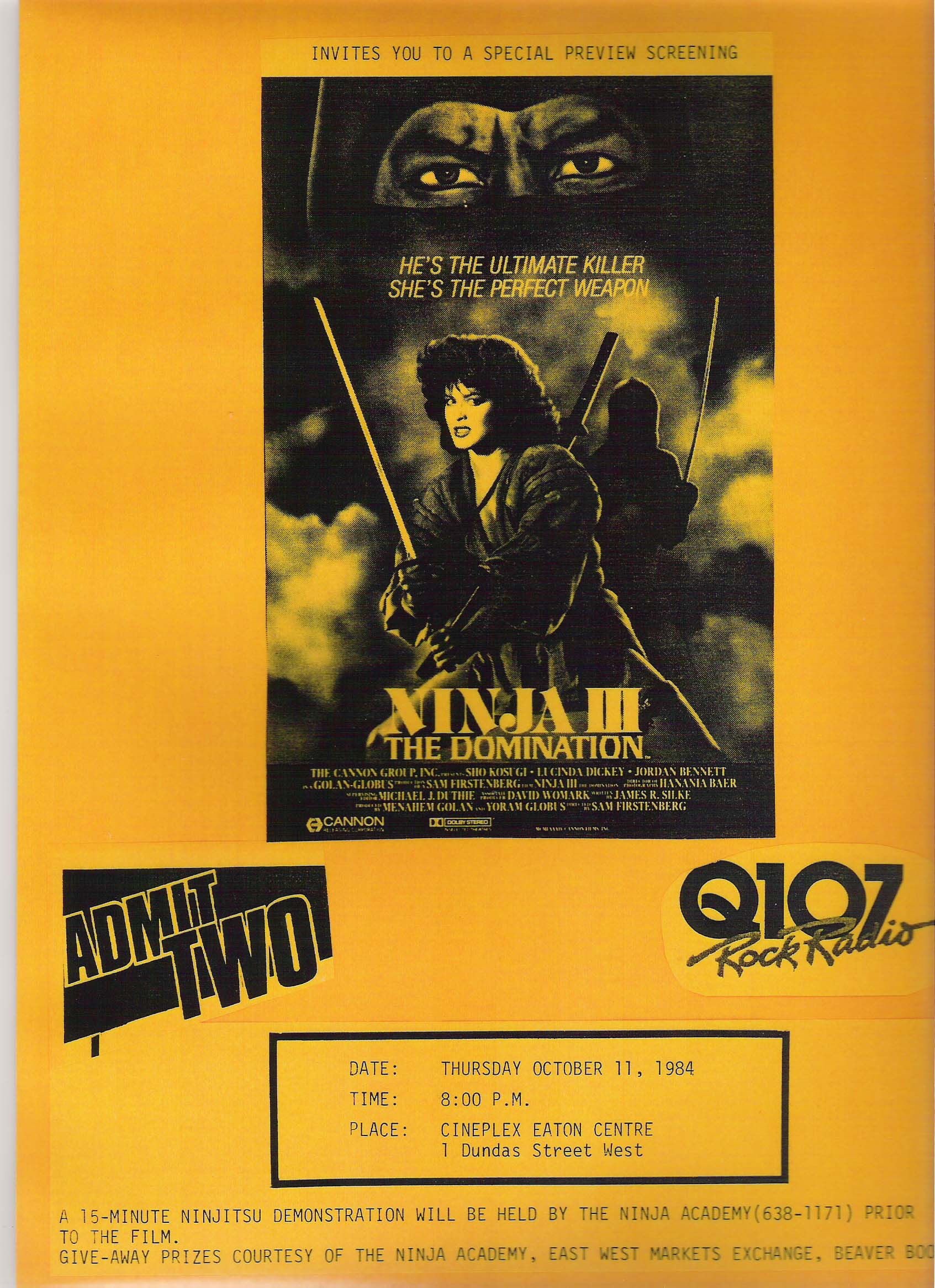
Also, Below is a Advertisement from a Ninja Movie that The Grandmaster Robert Law was invloved in back in the 80's.

As wrintten above:

Date: Thursday, Oct 11, 1984-8pm

Ciniplex Eaton Centre - 1 Dundas sr.W

A fifteen Minute Ninjutsu Demonstration will be held by the ninja Academy (638-1171) Prior to the film. Give away Prizes courtesy of the NINJA ACADEMY, East West markets Exchange, Beaver Brooks

----------------------------------------

2007 Summer Camp

THANKS TO ALL THE PARTICIPANTS!


Click here for 2007 Camp pics and clips!


-------------------------------

New Clips added! (may 14/07)

---------------------------


NOW AVAILABLE "GEIJIN RYU" APPAREL


This shop is powered by CafePress.com


View PICS and CLIPS here


New letters/testimonials


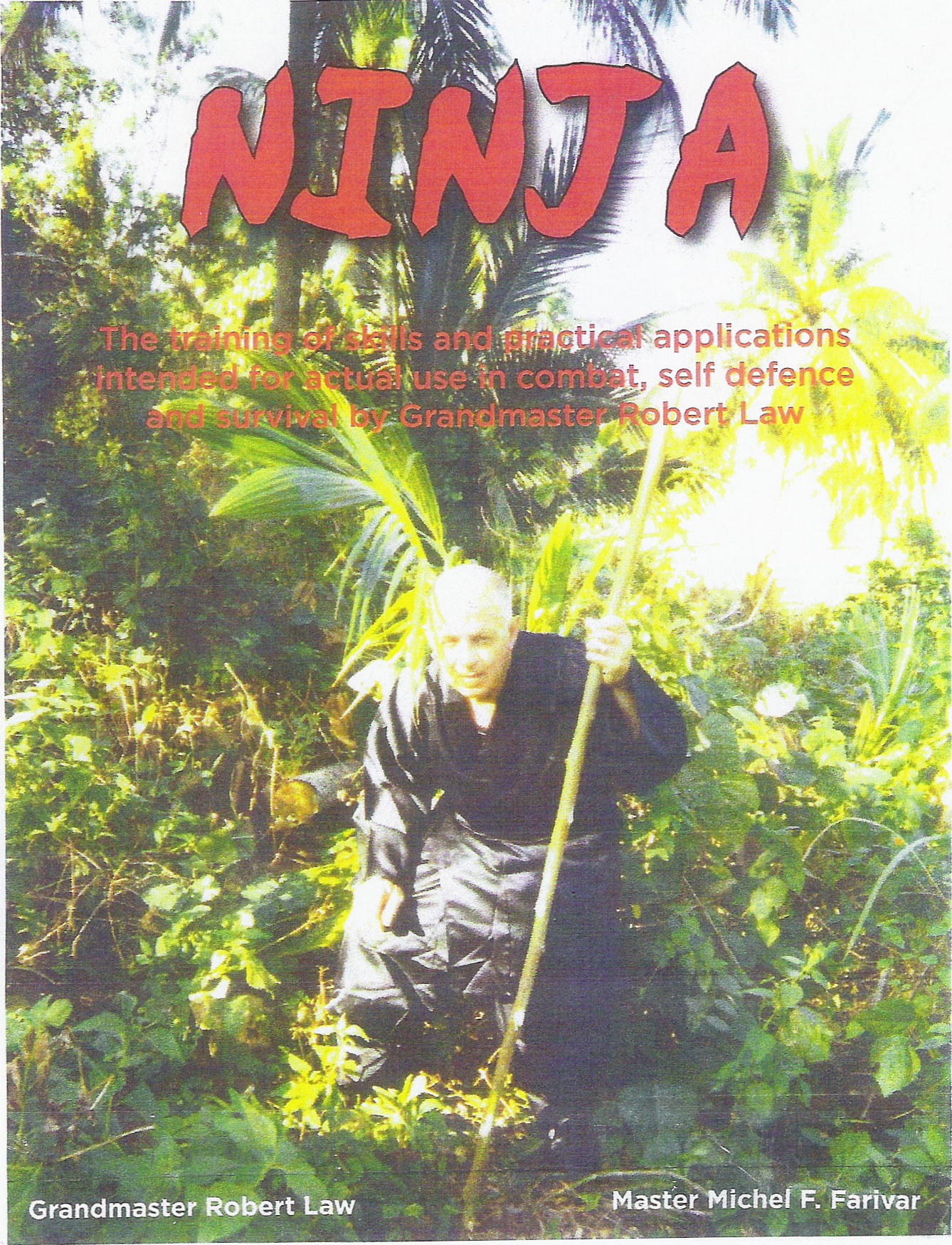
NEW BOOK NOW ON SALE!!

(full image)

From Practical to Tactical:

Ninja Tools and Weapons: A Historical Perspective

Note: title to change soon to - Ninja tools and weapons a historical perpective


The fascinating world of the Ninja and their weapons comes to life with this brilliant historical narrative, From Practical to Tactical . Book Description The Ninja are a fascinating, mysterious presence in our world. Ninjutsu was developed not only for survival but also to triumph against overwhelming odds. But little is known about the Ninja's weapons and mind-set.

The weapons of Ninjutsu are unusual and unorthodox. Though they have been popularized by the public's expanding interest in the Ninja arts, they remain poorly understood. Glamorization of this method of defense has led to a publicly perceived disassociation from its origins as a "peasant art." From Practical to Tactical provides a reframing of the skills of Ninjutsu, closer to the discipline's lower-class roots.

Author Michel Farivar, taught by grandmaster R.Law, attempts to clarify the origins of the weapons Ninjutsu as well as provide insight into the mindset that developed them. As Ninjutsu moves into the modern age, this clarification process continues and remains relevant to those interested in the anatomy and evolution of conflict.


You Gotta Hurt
To Be A
NINJA

By Alec Ross:
Special to the Whig-Standard OCT 13th 1990

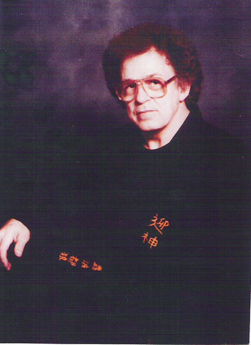
Robert Law is about five foot three, not particularly muscular, and wears glasses. His curly hair is greying and he’s got an ever-so-slight paunch. To look at him, you’d think he was a regular guy instead of a lethal weapon.
Robert Law is a master ninja. Not a teenage Mutant Ninja Turtle or a Bruce Lee wanna-be, but the real thing. Though unforbidding in appearance, Mr. Law is the 29th Grandmaster Geijin Ryu, an ancient order of Japanese Ninja warriors, and last weekend I saw him toss a 200-pound man through the air with an effortless twist of his arm.

The occasion wasn’t a rowdy bar brawl but the Fifth Canadian Ninja Seminar, held at a 45-acre former Boy Scout camp five miles north of Deseronto. Mr. Law operates a school called the Ninja Academy in west Toronto, and plans to open what he says will be the biggest Ninja training center in the world at his acreage next May. The Thanksgiving seminar was designed to give first timers an overview of Ninja skills.

The Sept. 19 advertisement (Ninja Seminar, Plan To Attend) in The Whig-Standard promised, among other things, day and night training among forested woodlands, and instructions in the use of exotic and unusual weaponry like articles of clothing, and household and personal items. Beyond that information, I didn’t know what to expect of the seminar, since I had no preconceptions - other than false impressions from movies - about what ninjas do. What I did expect however was that my fellow students would be all male, gung-ho macho types, all brawn and no brains.

I couldnt have been more wrong. There was plenty of brawn, but no lack of grey matter. Ten men (including me) and one women, ranging from 16 to 30, turned up for the weekend. Most had tried and rejected one form of martial art or another, but no one exhibited the egotistical or goon-like tendencies I figured would come with the territory. There were plenty of chances to show-off, but no one did.

For instance, Ed Tsal was quiet-spoken and athletic, lived in Downsview and worked at a computer company. Andy Dyal, always respectful of Mr. Law and a serious pupil, had a job at a leasing firm. His shaggy black hair and Van Dyke beard reminded me of Wolfman Jack. James Cameron, the only rank beginner besides me, was a stationary engineer at Queen’s University’s heating plant. He came because he was curious about the newspaper ad for a $150 Ninja weekend.

Just what is a Ninja?
“He’s everything.” says the diminutive Mr. Law, whose students address him as Master. “He’s a family man, a bodyguard, a government agent. He’s a fighter if he has to be, but he lives for peace.”

A Ninja is plenty more besides an artist, a linguist, a cook, a locksmith, an astronomer, a tightrope walker, a dog trainer, a master of disguise, an expert with a bow and arrow. A Ninja can set traps in the forest, and knows which plants and roots are good to eat. Ninjas usually work at night, so they can see in the dark. They can run for hours and go for days without sleep. Above all, says Mr. Law, the hallmark of a Ninja is a practical mind, independence and versatility.

What a Ninja isn’t, he says, is what you see in the martial arts movies - the guy who leaps 30 feet in the air, do quadruple backflips, and catch swinging machete blades between their palms. Such images deceive, says Mr. Law, because they leave the impression that the Ninja art is concerned only with violent combat. It can indeed be violent, but students who understand only that aspect miss the point and put themselves and others in damger.

“If you misuse the art, it will destroy you,” says the Master.

It’s possible, however, to start out with the wrong outlook and improve over time. “When a guy is aggressive or has a bad attitude, in this art, his attitude will change if he learns it right. You’ve gotta spend time with it. You can’t do it all in a year.”

The first night, a Friday, the master demonstrated dozens of techniques, including the aforementioned tossing of 200 pounds of solid muscle - otherwise called Dan - across the recreation room. We students tried to duplicate the moves. Using replicas of machetes, staffs, knives and swords made of plastic and wood, we learned how to disarm opponents carrying them by twisting arms and wrist or bending back necks. If done correctly, says Mr. Law, the moves don’t require much strength, which makes the Ninja art the perfect self-defense for women, children and elderly people. Ninja techniques are superior to those of, say, karate or judo, which are sports rather than true self defense, and which can prove woefully impractical in street situations.

“With karate or tae-kwon-do, what happens if you’re up against a wall and you can’t kick? You’re dead meat,” says the Master. “And in karate they teach you how to block. What are you gonna do, block a machete? And why block anyway, when it’s easier and hurts less to get out of the way.

‘A ninja is everything. He’s a family
man, a bodyguard, a government
agent. He’s a fighter if he has to be,
but he likes peace.’

The Ninja moves looked simple, but when I tried them I invariably found them much harder than they appeared. Some of them continually thwarted me, and in practices I ended up getting stabbed, sliced to ribbons, choked, or worse.

A big part of Ninja combat techniques is body movement. If someone comes running at you with a swinging a machete or a two-by-four, the smart thing to do is get out of the way. You simply and calmly step to one side or the other, preferably so you end up behind the attacker.

“He can’t hit what he can’t see,” says the Master.

One easy-looking but tricky technique I tried consisted of doing the sidestep body movement, grasping my opponent’ machete-holding hand, and twisting it so that his machete dropped to the ground and elbow faced upwards. By pressing down on the immobilized arm, I forced his knees to buckle in pain. He crumpled to the ground and was totally helpless as long as I kept a firm grip on his hand.

“Now you got ‘em” enthused the Master, whose ruthless language startled me at first. “WHAM WHAM WHAM!! You can take off his face, clean out his ribs, or cut his head off.”
“Isn’t that a bit drastic?” I asked.

“What’re you gonna do to a guy who comes at you with a machete? Shake his hand?”

We woke at 7:30a.m. on Saturday morning and began our day with a set of conditioning exercises. “It’ll wake you up.” said the master, who’d explained elements of the Ninja philosophy to me until 3:30 a.m.
Right off the bat we headed to the recreation hall and did 300 sit ups (I managed about 150), followed by countless push-ups on fingertips, three fingers, thumbs, knuckles and on one arm and one thumb. Next came a series of leg squats and toe touches. Then we went outside for 100 jumping jacks, a short, invigorating jog around the property, cartwheels, backflips, tumbles and rolls, rolling break falls, and rapid belly crawls across th dewy grass.

“You gotta hurt to be a Ninja.”counselled the Master, who did all the exercises along with us, chatting casually all the while. “No pain no gain.”

I had gained a lot by breakfast. Four days later, I’m still gaining.

Since it is my policy to laugh when the alternative is to cry, during the weekend I did my best to joke about my pain. It wasn’t extreme, merely terrific momentary discomfort, but was lessened by wisecracks. Unlike most of my more stoic fellow students, who were evidently born without nerves. I never hesitated to grunt, howl or whimper whenever agony struck. Especially during the cane, machete and staff assaults, where I was poked, jabbed and strangled.

I spent that sunny Saturday morning getting flipped, choked, handcuffed and hog-tied with thin nylon parachute cord. Most of the combat techniques eluded me, as usual, despite careful instruction from the Master. In seconds he’d go through a flurry of six different moves that looked exactly the same and ask at the end, “See the difference?”

I fared better with the rope techniques, probably because I used to be a rock climber and remembered most of my knots. The fact that it wasn’t painful also helped.

I learned some neat pressure points: sensitive places which, when you poke them, cause enough pain to render the body virtually helpless. One pressure point familiar to fans of the TV series Star Trek is commonly known as the “Spoke Grip” - a pinch between the base of the neck and the shoulder. Other examples are behind and below the ears, in the crook of the hand between the thumb and forefinger, on the inside bend of the elbow, and at the front of the pelvis just above groin. I couldn’t wait to try them on my friends.

At intervals the Master would tell us stories about his learning days as a Ninja. He said he was born in Japan, just outside Tokyo, but his parents died when he was young and grew up with various aunts and uncles all over the world. His relatives taught him the Ninja art, which was anything but gentle. He had scars on his hands, head and knees to prove it. He’s collaborated with military and security agencies across North America for 38 years, and done counseling and instruction work for rape crisis and battered women’s centers.

The training went on, and the Master bent limbs and necks into pretzels. I was constantly frustrated whenever I failed to perform seemingly simple manoeuvers, and apologized for my ineptness to my hapless training partners Steve Marshall and Pascal Audet, both long time Ninja students. They were good sports and endlessly patient with me. “You remind me of when I was a beginner after three days,” said Pascal. I decided to take this as a compliment, although I doubt it was.

Saturday night, I dreamt of drowning in an ocean of lactic acid. On Sunday morning the ocean had filtered into my muscles and I trouble getting out of bed because air pressure pinned me to the mattress. I mentioned my soreness to John “Tex” Jesionczak, one of the few who actually kept pace with the Master during the previous days’ exercises.

“I pushed myself to the limit yesterday and so did you,” he said. “So I figure I’m just as sore as you.” this struck me as a kind thing to say - I wasn’t alone in my misery.

By Sunday afternoon most of the students were, in the common parlance, toast. Fortunately for us, the ever-sensitive master responded accordingly and spared us from much strenuous physical abuse, am habit he repeated through the weekend. This, I thought was a sign of a good teacher. He pushed us all, but never beyond our capabilities.

That day we hurled knives at a log and a propped-up old door. I marveled at how the Master, whether he was running, or throwing the blades between his legs, rarely missed. We learned to braid cord into rope thickness, and were shown how to make Christmas tree decorations or , if we used reeds, baskets. We practiced avoiding blows issued by the Master with a five-foot-long bamboo stick by rolling around on the ground. (it wouldn’t hurt if we were hit, the stick was designed to give a bit.) We also learned the proper way to draw a sword from a sheath,

“Ever see that before?” the Master asked m, shortly before the students finally retired for a thanksgiving dinner cooked by the master’s wife. Beverly Law.
“No,” I confessed. It’s been years since my last sword fight.”

Alec Ross is a freelance writer living in Kingston.


Has the Ninja art been commercialized over the years?

read an interesting article by David T. Suzuki

part of the article below...

It was a time of Ninja Summits, Shinobi Training Camps, Tai Kais, and innumerable other ninjutsu-related events that spanned the globe.

Despite the predictable petty politics, everything was fine for a long time until, inevitably, Hollywood media whores and greedy martial artists combined forces to impugn the credibility, and end the growth, of ninjutsu. Golan-Globus studios, for example, produced opportunistic films that earned their owners untold wealth while trivializing the concepts of the ninja's art. Illiterate writers, such as Eric Von Lustbader and Ashida Kim, hacked out reams of gibberish while "revealing" to the world their (grossly misinformed) understanding of ninjutsu.

Ninjutsu's downward spiral was not helped by the fact that one Grandmaster, Masaaki Hatsumi, began evaluating black belt candidates via video and awarding elevated ranks as quickly as the checks came in and the assembly line could crank the credentials out. Nor by te fact that one of his senior students, Richard Van Donk, currently sells a "Black Belt Home Study Course for only $379.95." These and other damning commercial practices bring a new meaning to the idea of a ninja as "the enemy within."

Of course (as I well know) over time, trends, goals, and priorities change. Stephen Hayes, once the American spokesman for the Bujinkan system, diverged from ninjutsu to pursue Peyton Quinn-type training. Robert Bussey, another former boojie, first reinvented himself as the head of Warrior International, and more recently works for an organization that offers protective services. Other less-known but similarly prominent ninjutsu instructors have likewise hung up their hoods to pursue alternate directions. (I find it darkly ironic that they all purported to practice "the art of perseverance," a common translation of the term "ninjutsu.") All this is why I was pleased to discover that Loriega-sensei has persevered and continued expanding in art of ninjutsu.

What sets the Ninpokai training halls apart from other ninja dojo is the comprehensive curriculum it provides. Ninety-nine percent of the dojo that claim to teach ninjutsu in fact only offer classes in taijutsu -- yet taijutsu is only a small (albeit important) facet of the art of ninjutsu. Many do not even teach a student weaponry until he has advanced to the dan level. (This happens because either the instructor lacks the knowledge or is deliberately withholding it to prolong the student's training.) The dojo places too much importance on fighting techniques and hardly any on strategy and tactics. They forget, or never learned, that if a ninja finds himself in a situation where he's compelled to fight, he has failed as a ninja.

link:

http://www.realfighting.com/0702/schoolart.html


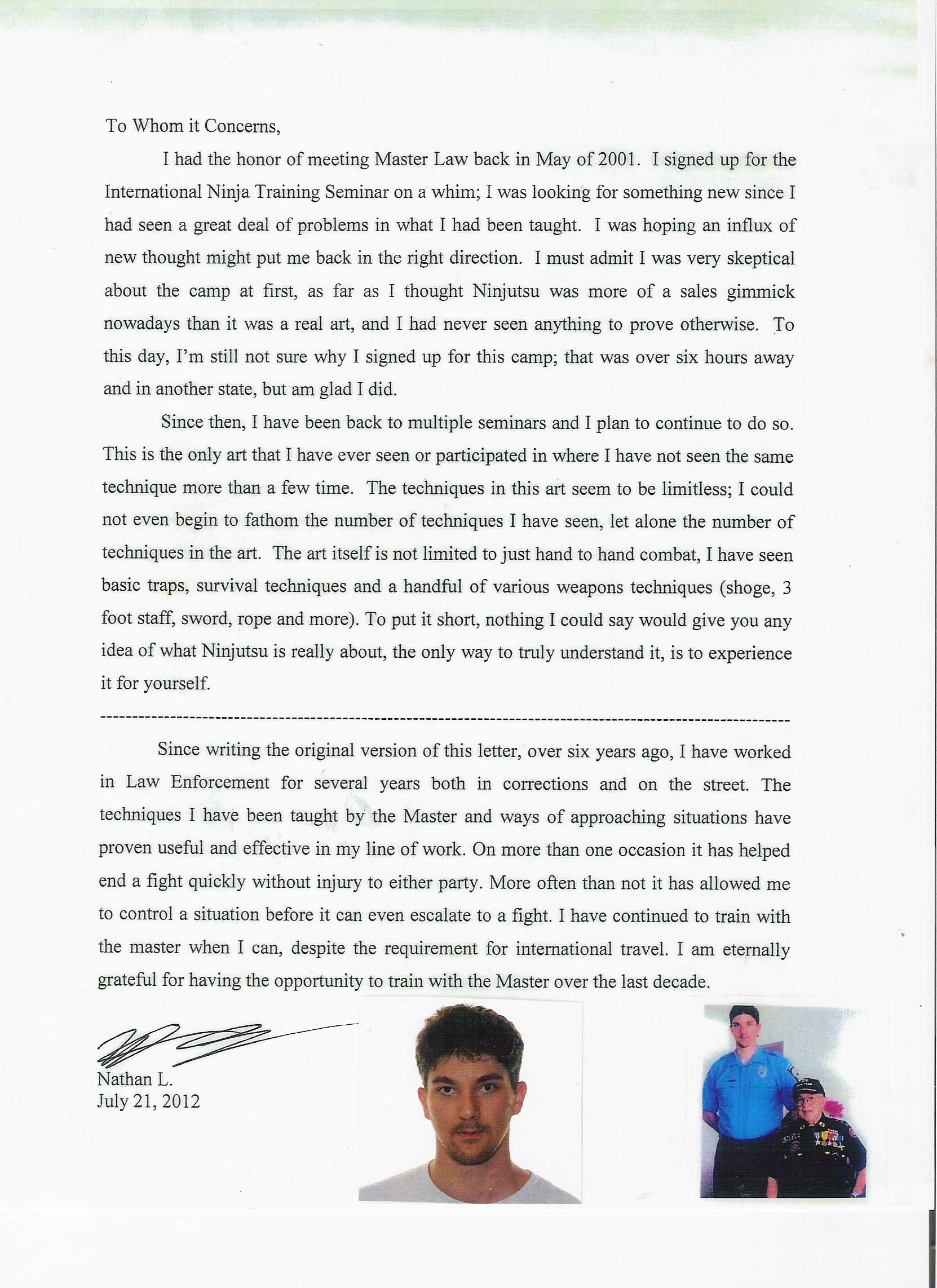
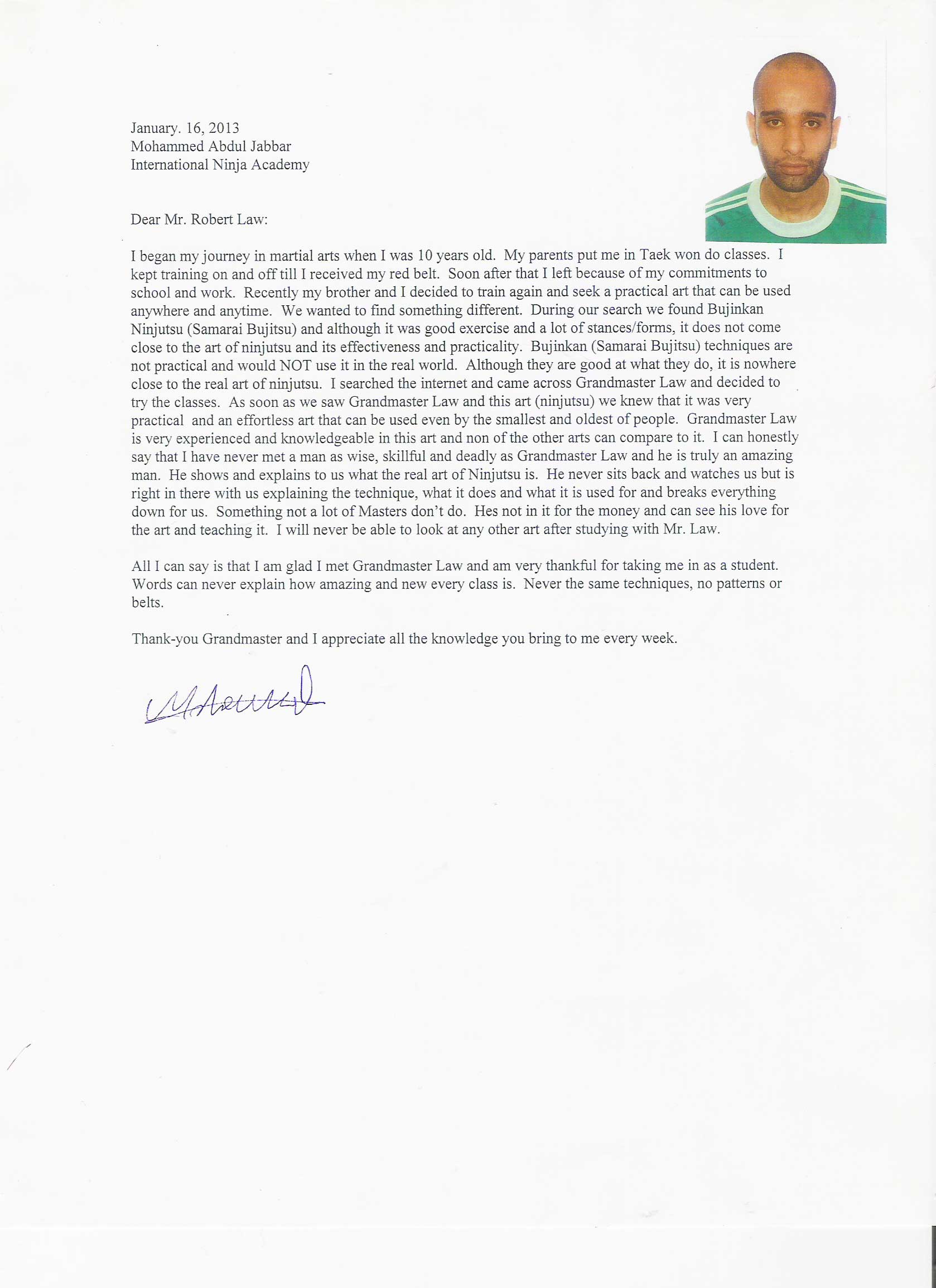
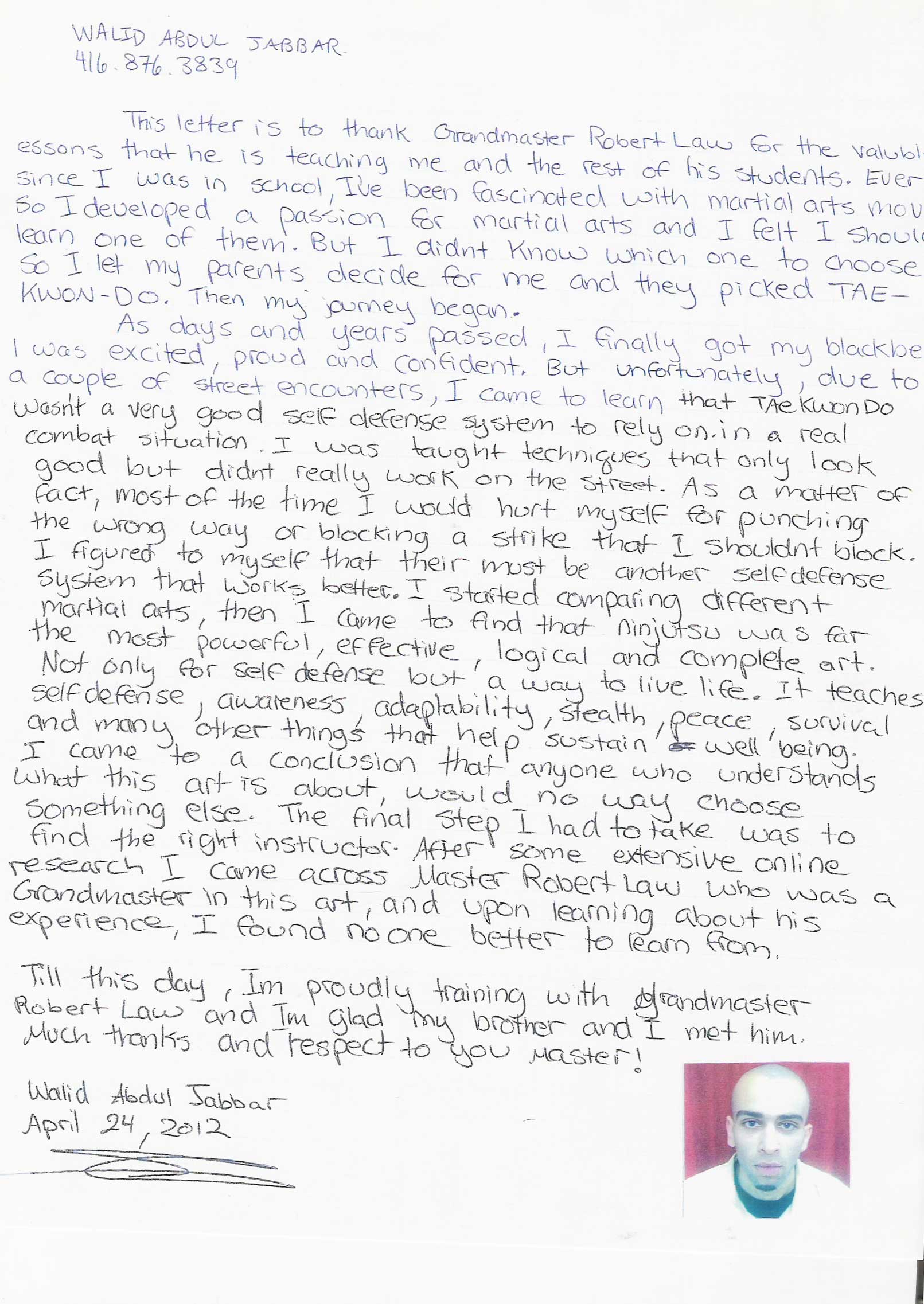
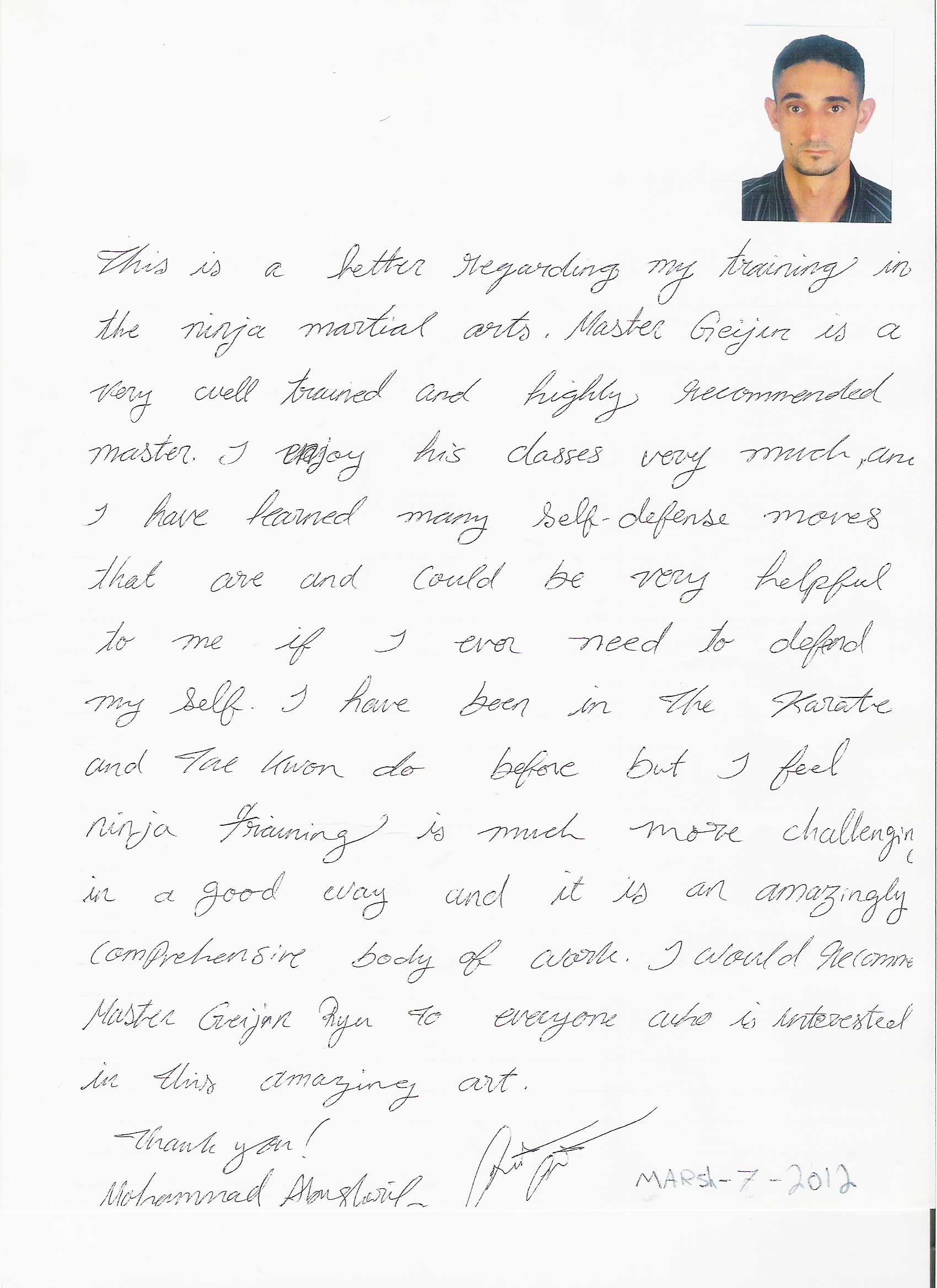
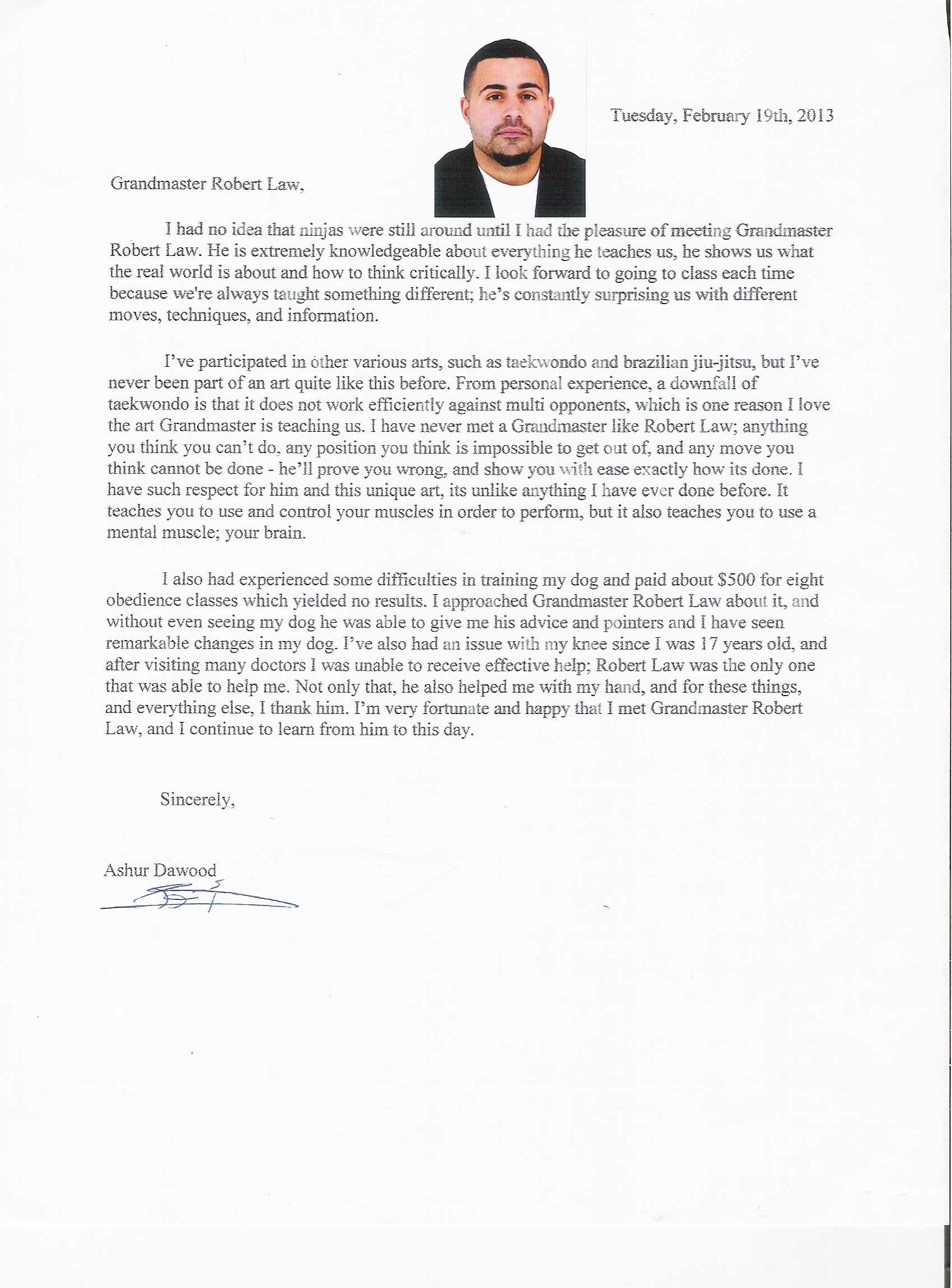
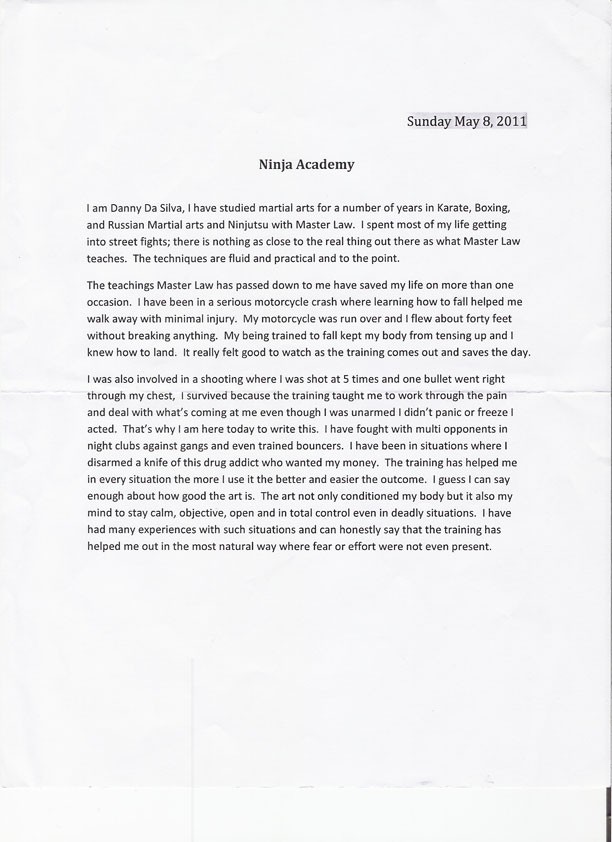
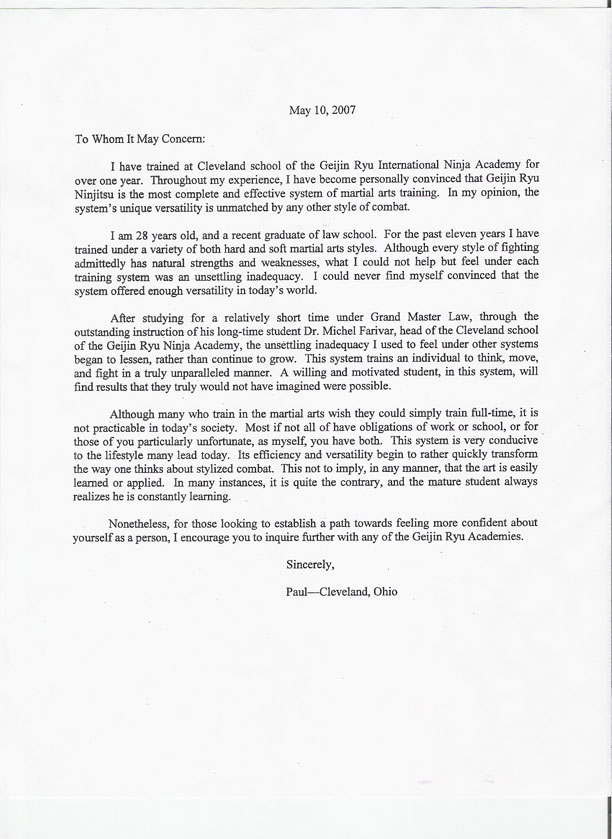
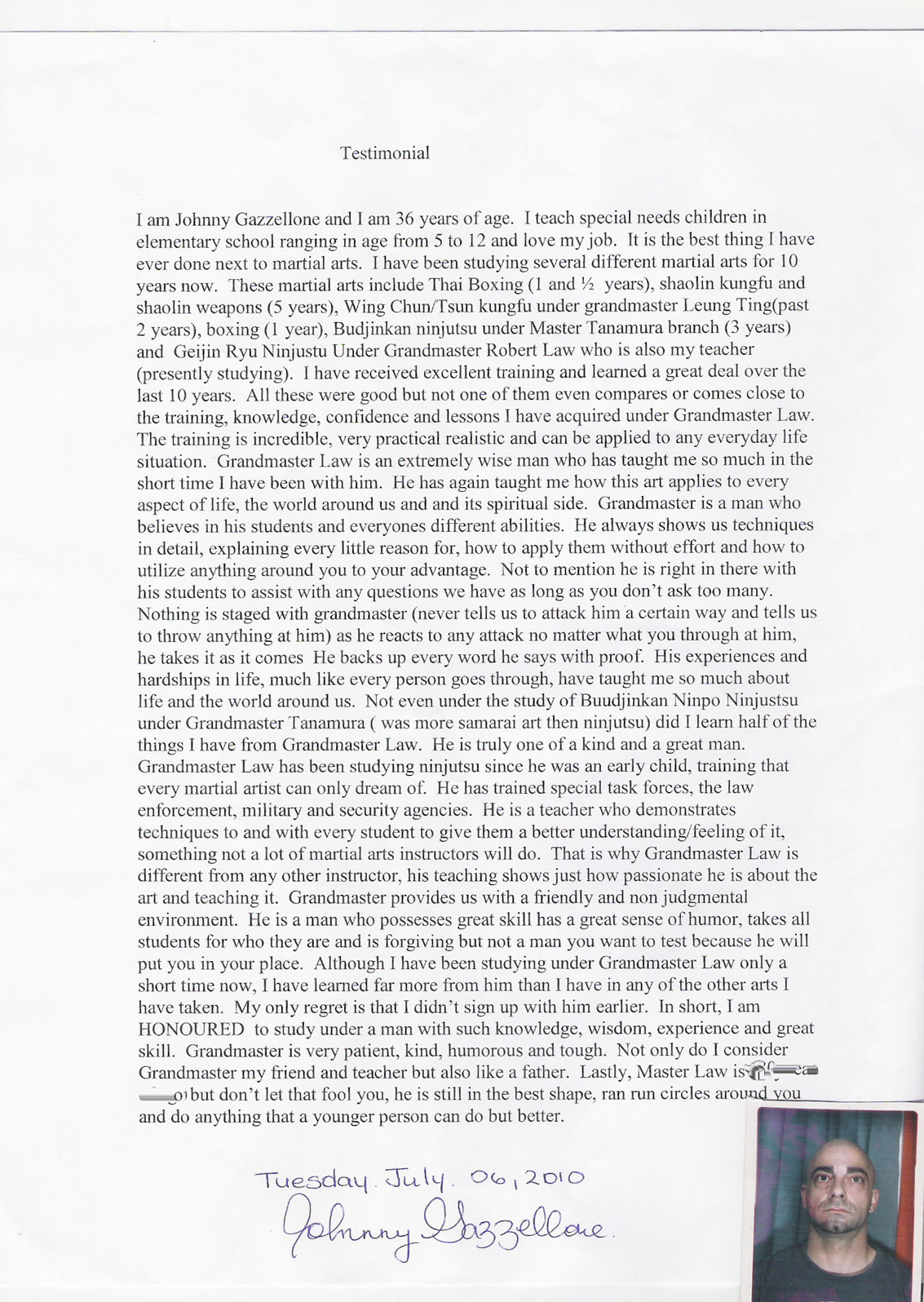
Get first hand account!...Read many of hundreds of personal letters at our new "Leters of Appreciation" section.

(click here)


Contact US - Site Map - Home Programs


Spider Silk Design